
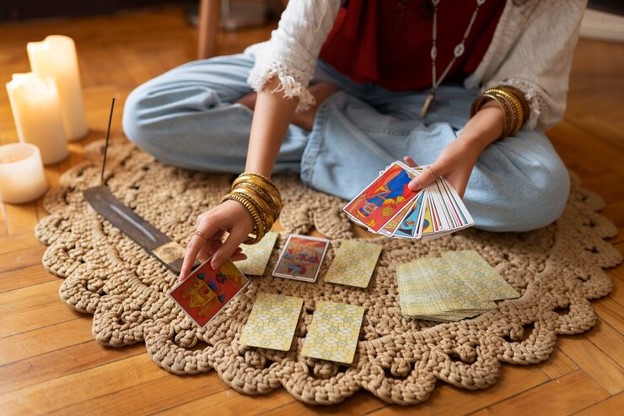
A tarot spread is simply a layout. Where each card lands gives it a role, such as past, challenge, or advice. The same cards can tell very different stories depending on the layout chosen, which is why many people begin by typing tarot reading near me and then wonder which style of session to ask for.
This guide walks through the most useful spreads, from quick pulls to the famous Celtic Cross.
Why Spreads Matter
A single card gives a theme. A spread gives a story. Positions add context, so a card that seems harsh in one spot may read as a useful warning in another.
Different layouts also suit different moods. Some invite quick reflection, while others invite a longer, slower conversation.
Understanding the Cards Within a Spread
Major cards point to life themes and turning points. Minor cards describe day to day experience through four suits.
- Wands: energy, ambition, and action.
- Cups: emotion, love, and intuition.
- Swords: thought, truth, and conflict.
- Pentacles: work, money, and stability.
The Single Card Pull
One card, one message. This is the quickest way to reflect on a day, a mood, or a yes or no style question. It works well for beginners because there is only one image to study.
Best Used For
- Daily guidance and quick check-ins.
- Simple decisions with two clear paths.
- Building familiarity with card meanings.
The Three Card Spread
The three card layout is the most popular choice, and for good reason. It offers structure without overload.

Common Ways to Read It
- Past, present, and future.
- Situation, action, and outcome.
- Mind, body, and spirit.
- Ourselves, the other person, and the link between us.
Three cards are enough to show direction, yet compact enough to keep the message clear.
The Five Card Spread
Adding two cards brings more depth. A common layout covers the present, the challenge, the hidden influence, the advice, and the likely path.
It suits questions about work changes, moves, or personal goals, where several factors need a look. Each added card should earn its place by answering a distinct question.
The Horseshoe Spread
This seven card arc is a middle path between short layouts and the Celtic Cross. Cards usually represent the past, present, hidden factors, other people’s influence, obstacles, advice, and outcome.
Its shape helps readers show how events build toward a result, which many clients find easy to follow.
The Celtic Cross
The Celtic Cross is the best known layout, using ten cards to examine a situation from many angles. It is detailed, so it works best for questions that carry real weight.
What the Ten Positions Often Mean
- The present situation.
- The main challenge.
- The foundation or root cause.
- The recent past.
- Our conscious goal.
- The near future.
- Our own attitude.
- Outside influences.
- Hopes and fears.
- The likely outcome.
Position names vary among readers and traditions, so a good reader explains the layout before beginning.
Because it covers so much ground, the session often unfolds as a conversation rather than a list of meanings.
Other Spreads Worth Knowing
- Relationship spread: explores two people and the bond between them.
- Decision spread: compares two options side by side.
- Yearly spread: gives one card for each month ahead.
- Self care spread: highlights what needs rest, attention, or release.
How to Choose the Right Spread
- Name the question in one sentence.
- Match the size of the layout to the weight of the question.
- Consider the time available for the session.
- Ask the reader which layout they recommend.
Matching Questions to Layouts
A few examples show how question and layout fit together.
- “What energy surrounds today?” One card.
- “Should we accept this job offer?” Decision spread.
- “Where is this relationship heading?” Three or five cards.
- “What should we know about the year ahead?” Yearly spread.
- “Why does this pattern keep repeating?” Celtic Cross.
Tips for Reading Any Spread
- Read the whole layout before judging single cards.
- Notice repeated suits, numbers, or colors.
- Treat reversed cards as nuance, not doom.
- Focus on advice cards for practical action.
Getting the Most From a Reading
Sessions work best when we participate. Asking what a card means in our own context turns general symbolism into personal insight.
- Take notes on the positions and the messages.
- Photograph the spread, if the reader allows it.
- Revisit the notes after a few weeks.
Practicing Spreads at Home
Learners can build confidence with a simple routine. Pull one card each morning, record first impressions, and compare them with the day’s events. After a few weeks, move to a three card layout.
Finding a Reader Who Explains the Layout
A skilled reader names the spread, explains each position, and invites questions. Searching for a tarot psychic is a common first step, though clear communication and honest limits matter more than distance.
Others prefer remote sessions. Anyone typing tarot psychic readings near me may be surprised by how many local readers also offer phone or video options, which widen the choice.

What a Tarot Spread Can and Cannot Do
A spread reflects current patterns and offers perspective. It does not lock in a future, and it cannot replace professional advice on health, law, or money. Free will always remains firmly with us.
Common Mistakes With Spreads
- Asking the same question again and again.
- Ignoring cards that feel uncomfortable.
- Memorizing meanings without reading the picture.
- Expecting a dramatic answer from every card.
Final Thoughts: Match the Layout to the Question
A great reading begins with a clear question and a layout that fits it. From a quick single card to the detailed Celtic Cross, each spread offers a different lens. Once we understand them, every session becomes easier to follow and far more useful.
If we are ready to explore a spread with a caring guide, NJ Psychic offers an experienced space to begin. Book a session today and discover which layout brings the most clarity.
Frequently Asked Questions
How many cards are used in a standard tarot deck?
A standard deck holds 78 cards, divided into 22 major arcana and 56 minor arcana. Spreads use only a few of them at a time, so every session draws from the same deck but tells a different story.
Is the Celtic Cross too complex for beginners?
It can feel dense at first, yet a guided reader makes it approachable. Beginners may find it easier to start with three or five cards, then move up as comfort grows. Receiving a Celtic Cross reading is different from learning to lay one out, since the reader carries the interpretation.
Can we ask more than one question in a single spread?
A spread works best with one focus, since mixed questions can blur the message. Related follow-up questions are fine, and a reader may pull clarifying cards for them. Separate topics deserve separate layouts.
How long does a spread reading usually take?
A single card or three card pull may take ten to twenty minutes, while a Celtic Cross often needs thirty to sixty. Time also depends on how many questions and discussions follow. Confirming the length when booking helps us plan a calm, unhurried session.